

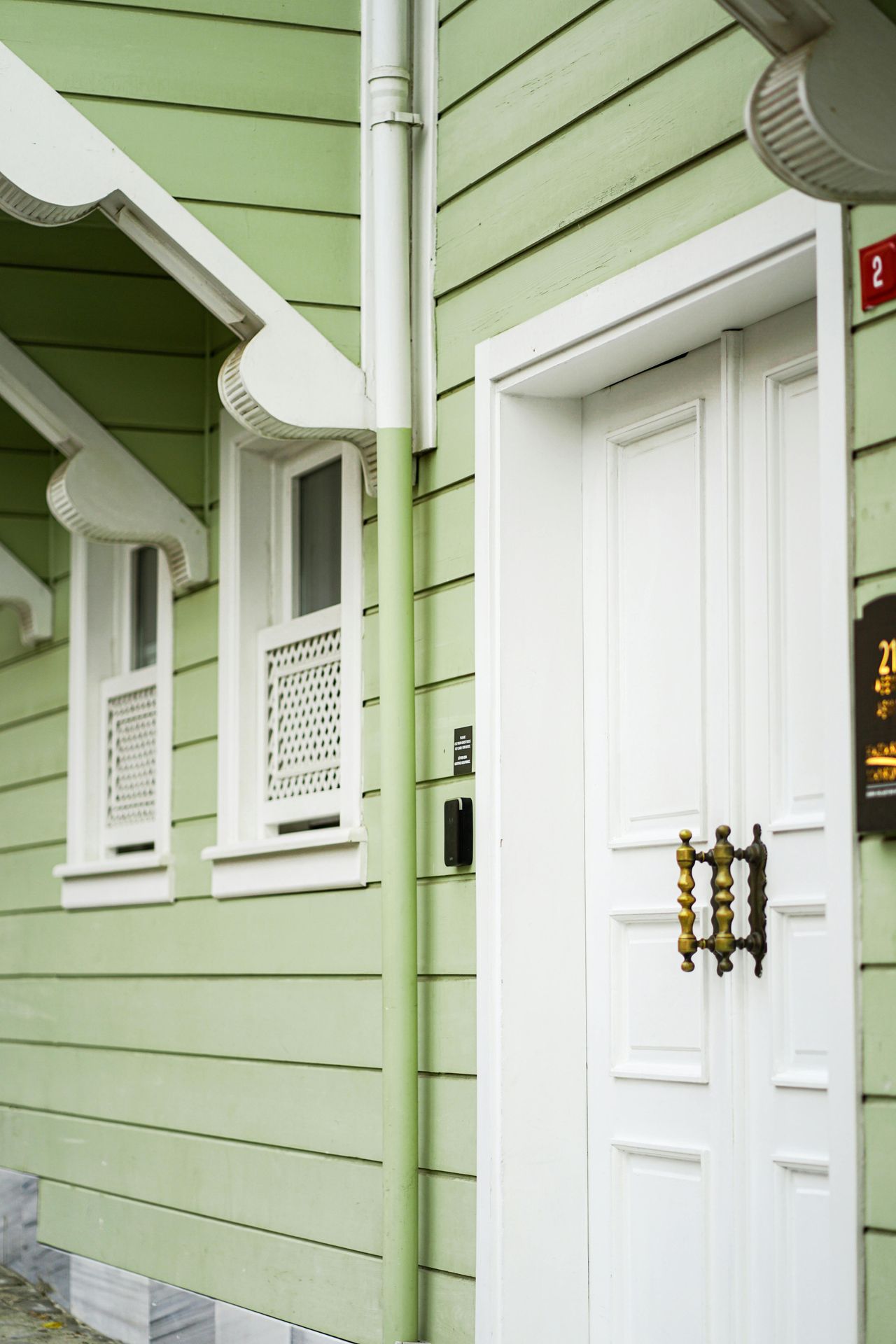
Small architectural details can tell surprisingly big stories. Few features do that better than the old-fashioned milk door.
What a milk door was and why it appeared in so many homes

A milk door, sometimes called a milk chute or milk box, was a small built-in compartment set into the exterior wall of a house, usually near the kitchen. The milkman could open it from outside and leave bottles of milk, cream, butter, or eggs, while the homeowner retrieved them from inside. In many cases, the compartment had two doors, one facing outdoors and one facing into the kitchen or pantry, creating a neat handoff between the street and the household.
These features became common in the late 19th and early 20th centuries, especially in North American suburbs and urban neighborhoods where home delivery was part of ordinary life. At the time, regular milk delivery was not a luxury. It was a central piece of the food system, particularly before supermarkets, widespread car ownership, and modern household refrigeration changed how people bought perishables.
The milk door solved several practical problems at once. It protected bottles from weather, reduced the chance of theft, and kept deliveries cleaner than leaving them on a porch step. It also allowed the milkman to complete his route early in the morning without waking the household, which mattered in an era when delivery schedules were built around domestic routines and a strict sense of neighborhood order.
Architectural pattern books and house plans from the early 20th century often included these compartments as useful modern conveniences. That tells us something important: the milk door was not an odd novelty. It was considered a sign of an efficient, up-to-date home, designed around a service economy in which fresh goods came to the house rather than families driving out to buy everything themselves.
The world of daily milk delivery before supermarkets took over
To understand milk doors, it helps to understand how central milk delivery once was. For many families, milk arrived every day or several times a week in reusable glass bottles. The delivery system depended on local dairies, horse-drawn wagons at first, then delivery trucks, and carefully organized routes that connected farms, bottling plants, and residential neighborhoods with remarkable regularity.
Before electric refrigerators became standard, households had less ability to store large quantities of fresh food safely. Iceboxes helped, but they required regular ice delivery and had limited capacity. Fresh milk spoiled quickly, so frequent delivery made practical sense. A milk door was part of a larger domestic infrastructure that also included ice doors, bread delivery, coal chutes, and other built-in features reflecting the service networks of the time.
The milkman was also a familiar figure in neighborhood life. He often knew which homes needed extra cream, which families had children, and which customers paid weekly. In many communities, the same driver served the same route for years. That kind of regular contact created a level of trust that seems unusual today but was once normal, especially in tightly knit working- and middle-class districts.
This was not just about convenience. It was about the structure of consumption itself. Households bought smaller amounts more often, suppliers came directly to the customer, and homes were designed to receive those deliveries efficiently. The milk door reveals that the front line of food distribution used to run through the walls of the house, with architecture shaped by the cadence of daily service rather than the weekly supermarket trip.
What milk doors reveal about domestic labor and household management

Milk doors also tell us a great deal about who managed the home and how much labor daily provisioning required. In the early 20th century, household management was often treated as a demanding logistical task, usually carried by women. Keeping a family fed meant tracking deliveries, returning empty bottles, managing perishables, and coordinating with a stream of service workers who might include the milkman, iceman, baker, grocer, and laundry driver.
The design of the milk door reduced friction in that work. Instead of answering the door at dawn or stepping outside in bad weather, the homemaker could simply collect the delivery from the kitchen side. That sounds minor, but in a world without many labor-saving devices, small efficiencies mattered. Domestic manuals of the era frequently emphasized order, timing, cleanliness, and the smart layout of workspaces, especially around the kitchen.
The milk door also reflected a house organized around specialized zones. The kitchen was increasingly seen as a rational workspace rather than just a general family room. Built-in cabinets, pass-throughs, breakfast nooks, and delivery compartments all supported a more systematized view of domestic labor. Historians of home design often note that these features emerged alongside broader movements in sanitation reform and scientific housekeeping.
At the same time, the milk door underscores how much effort was hidden in “ordinary” life. Someone had to rinse and return bottles, watch for spoilage, check accounts, and plan around the family’s needs. The compartment itself was simple, but the routine around it was not. In that sense, milk doors are evidence of an economy built on repeated, mostly invisible acts of care, planning, and maintenance inside the home.
Trust, sanitation, and the changing standards of modern living
One reason milk doors feel so evocative today is that they point to a society built on everyday trust. A delivery worker could approach the house before sunrise, open an exterior hatch, and place food inside a private residence without direct supervision. That arrangement depended on social norms, neighborhood familiarity, and the expectation that most people would respect both property and routine.
Yet trust alone was not enough. Milk was one of the most heavily scrutinized foods of the late 19th and early 20th centuries because contaminated milk could spread disease, especially among children. Public health reformers pushed for pasteurization, cleaner bottling, inspection regimes, and better handling practices. The milk door fit into this larger sanitary ideal by helping keep bottles covered, off the ground, and somewhat insulated from dirt, animals, and summer heat.
Some compartments were even lined with tile or metal to improve cleanliness. Others were positioned in shaded walls to keep contents cooler for longer. These details remind us that domestic architecture absorbed public health concerns in very concrete ways. A built-in milk box was not merely quaint. It was part of a broader attempt to make the home more hygienic, efficient, and scientifically managed.
Over time, however, the same feature that once looked modern began to seem risky or obsolete. As concerns about home security grew and shopping habits changed, a door in the side of the house no longer felt reassuringly convenient. Standards of modern living shifted. What one generation saw as a clean and rational solution, another saw as a drafty, vulnerable relic from a more intimate but less private age.
Why milk doors disappeared from everyday architecture

Milk doors faded for several reasons, and most of them were tied to major changes in technology and consumer habits after World War II. Refrigerators became standard household appliances, letting families store milk and other perishables for much longer. At the same time, supermarkets expanded, car ownership increased, and suburban development reorganized how people bought food. The daily doorstep delivery system no longer made as much economic sense.
The milk industry itself also consolidated. Instead of many local dairies serving compact routes, larger regional systems increasingly supplied stores rather than individual porches. Single-use cartons and plastic containers gradually replaced the old returnable glass bottle economy in many places. Once customers were buying milk by the gallon during a weekly shopping trip, the milk door lost its purpose.
Architecture followed behavior. Mid-century houses were designed around garages, larger refrigerators, and a more self-service model of household consumption. Builders stopped including dedicated delivery compartments because they were no longer seen as essentials. In many older homes, the doors were sealed shut, insulated over, or converted into small storage niches as renovation trends favored tighter building envelopes and improved security.
And yet the disappearance of milk doors reveals just as much as their original popularity. Their decline marks the shift from local, repetitive, relationship-based commerce to centralized retail and bulk purchasing. It also marks a deeper cultural transition: homes were no longer built to receive a stream of neighborhood service workers. Instead, families were expected to leave the house, drive to stores, and bring the goods back themselves.
Why people still find milk doors fascinating today
Milk doors continue to capture the imagination because they make the past tangible. Unlike abstract statistics about urbanization or food distribution, a small hatch in the kitchen wall is easy to picture and easy to connect with. It instantly suggests a world of clinking glass bottles, dawn deliveries, handwritten accounts, and a household rhythm shaped by local routines rather than digital alerts and big-box retail.
They also appeal to people interested in historic homes because they show how architecture records behavior. A staircase, pantry, servant bell, sleeping porch, or milk door can reveal what families feared, valued, consumed, and expected from daily life. In preservation circles, these modest features are often prized precisely because they illuminate ordinary experience rather than grand design. They show how a house actually worked.
There is also a note of nostalgia in the fascination, though it should be handled carefully. The world of milk doors was not necessarily simpler in any ideal sense. It depended on constant labor, rigid schedules, and service systems that often rested on class and gender hierarchies. Still, many people respond to the idea of more localized commerce and regular face-to-face contact, especially at a time when so much consumption feels impersonal.
In the end, milk doors matter because they reveal how closely homes once interacted with the surrounding neighborhood economy. They are reminders that architecture is never just about shelter. It is also about systems of delivery, assumptions about trust, patterns of labor, and the technologies a society takes for granted. A tiny door in an old wall can open onto an entire history of everyday life.


